
Are you craving tender, flavorful corned beef but worried about spending hours in the kitchen? Slow cooking is the secret to transforming a tough cut into melt-in-your-mouth perfection.
In this guide, you’ll discover simple steps to slow cook corned beef that will impress your family and friends. Whether you’re new to slow cooking or looking to perfect your recipe, you’ll learn how to get the best taste and texture every time.
Keep reading to unlock the easy method that takes the guesswork out of cooking corned beef!
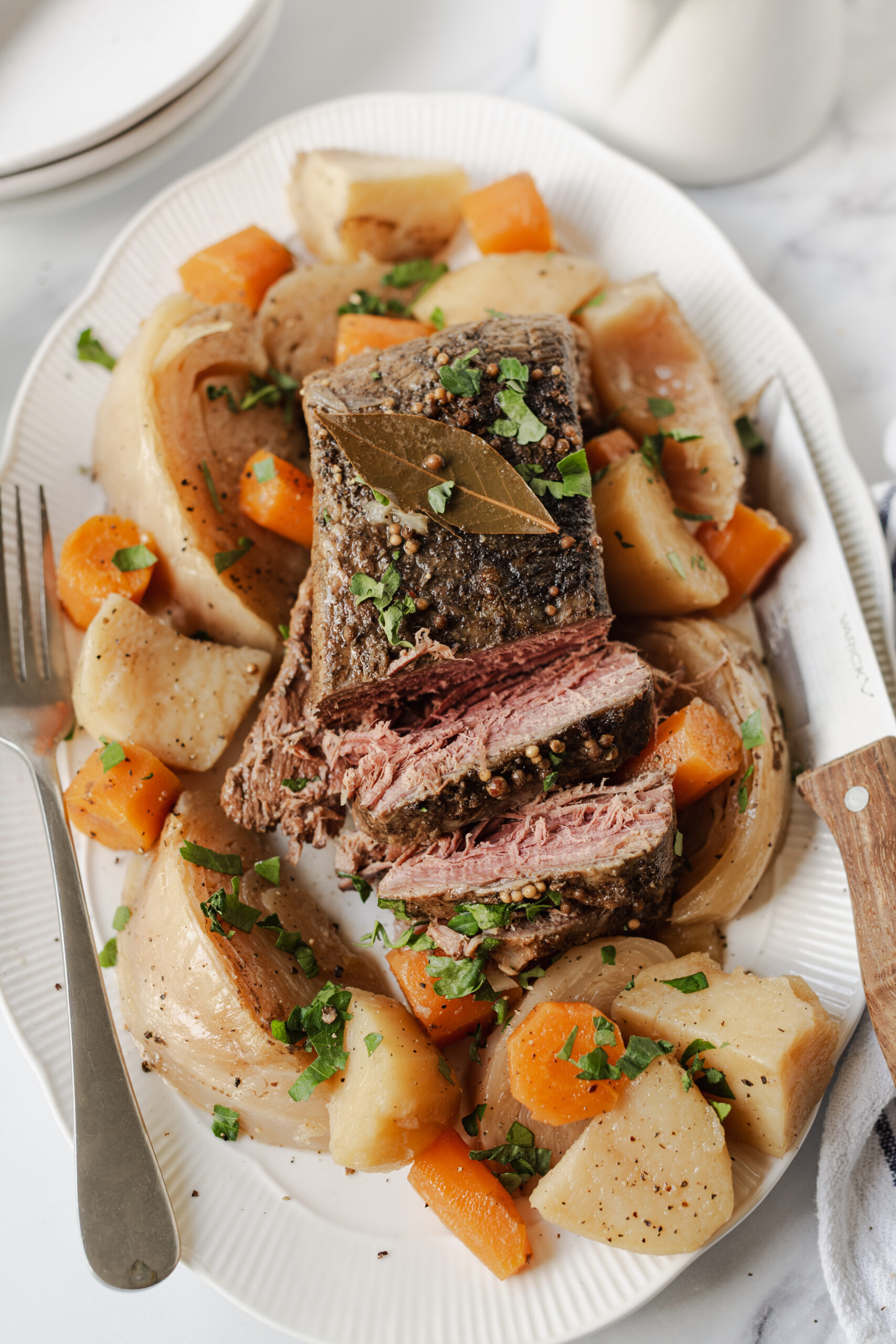
Credit: www.foodfaithfitness.com
Choosing Corned Beef Cuts
Choosing the right cut of corned beef is essential for a delicious dish. The cut affects the texture and flavor. Knowing the options helps in making the best choice.
Brisket Options
Brisket is the most common cut for corned beef. It includes two parts: point and flat. The point cut has more fat and is flavorful. The flat cut is leaner and slices evenly. Decide based on your preference for fat content and presentation.
Size And Weight Considerations
Think about the size of your slow cooker. Ensure the beef fits comfortably inside. A larger piece takes more time to cook. A smaller cut might dry out faster. Weigh your options carefully to match your cooking needs.
Preparing Corned Beef For Slow Cooking
Preparing corned beef for slow cooking ensures the best flavor and texture. Taking time to prepare the meat properly helps remove excess salt and tough parts. This step sets the foundation for a tender, delicious meal.
Rinsing And Trimming
Start by rinsing the corned beef under cold water. This removes the brine and surface salt. Use your hands to gently rub the meat while rinsing. Next, trim off any thick fat or tough skin. Leaving some fat is fine, as it adds flavor during cooking.
Soaking To Reduce Saltiness
Soaking the corned beef in fresh water helps reduce saltiness further. Place the meat in a large bowl or pot. Cover it with cold water and refrigerate. Change the water every few hours for a few times. This process softens the meat and balances the taste before slow cooking.
Selecting The Right Slow Cooker
Selecting the right slow cooker is key to making tender, flavorful corned beef. A suitable slow cooker ensures even cooking and holds the meat comfortably. It also allows you to control temperature and time for perfect results. Consider your kitchen space and cooking needs before choosing one.
Size And Capacity
Choose a slow cooker size based on the amount of corned beef you plan to cook. A 4 to 6-quart cooker is ideal for most families. It fits a 3 to 4-pound corned beef brisket well. Larger models work for bigger cuts or batch cooking. Smaller slow cookers might not fit the meat properly, causing uneven cooking.
Features To Look For
Some slow cookers have features that make cooking corned beef easier and more reliable. Look for:
- Adjustable temperature settings: Low, High, and Keep Warm options.
- Programmable timers: Set cooking time and auto-shutoff.
- Removable stoneware: Easy to clean and dishwasher safe.
- Sealed lid: Helps keep moisture inside for juicy meat.
- Slow cook and sear combo: Some models allow browning before slow cooking.
These features improve control and convenience during the cooking process.
Credit: realfoodwholelife.com
Flavoring Your Corned Beef
Flavoring your corned beef is where the magic happens. The slow cooking process softens the meat, but the spices and aromatics give it character and depth. Choosing the right ingredients can transform a simple cut into a hearty, comforting meal that your family will ask for again and again.
Using Pickling Spices
Pickling spices are essential for authentic corned beef flavor. These usually include mustard seeds, coriander seeds, bay leaves, peppercorns, and cloves. Adding a tablespoon or two directly to your slow cooker infuses the beef with a warm, spicy aroma that fills your kitchen.
Try to toast the spices lightly in a dry pan before adding them. This extra step releases their oils and boosts their flavor. Ever noticed how store-bought corned beef lacks that punch? That’s because it often misses this fresh spice burst.
Adding Vegetables And Aromatics
Vegetables do more than just bulk up your meal—they add subtle sweetness and depth. Classic choices like onions, carrots, and celery work wonderfully. Place them at the bottom of the slow cooker to create a flavorful bed for your beef.
Don’t forget aromatics like garlic and fresh herbs such as thyme or parsley. A couple of smashed garlic cloves can make a huge difference in complexity. Have you tried adding a few whole peppercorns or a crushed bay leaf? They release flavor slowly, enhancing every bite.
Slow Cooking Techniques
Slow cooking corned beef allows the flavors to deepen and the meat to become tender without much effort on your part. Understanding the right techniques can make the difference between a tough meal and a melt-in-your-mouth experience. Let’s break down how heat settings and cooking times influence your slow-cooked corned beef.
Low Vs. High Heat Settings
Choosing between low and high heat settings depends on how much time you have and the texture you want. Low heat cooks the beef gently, allowing the collagen to break down fully, resulting in tender, juicy meat. High heat speeds up the process but can risk drying out or toughening the beef if not watched carefully.
Think about your schedule: if you can set it and forget it, low heat is your best friend. I once tried high heat to save time, but the beef was chewy—teaching me that patience really pays off. Using low heat ensures that every bite is soft and flavorful.
Optimal Cooking Times
Cooking time is crucial for perfect corned beef. Typically, 8 to 10 hours on low heat works wonders. This slow approach lets the flavors meld and the meat tenderize without losing moisture.
If you’re short on time, cooking on high heat for 4 to 6 hours is possible, but check the meat early to prevent overcooking. Remember, it’s easier to cook longer than to fix overcooked beef. Are you willing to invest time for that exceptional tenderness, or do you prefer a quicker meal?
Checking For Tenderness
Checking for tenderness is a crucial step when slow cooking corned beef. It ensures your meat is perfectly soft and easy to slice or shred. Knowing how to test and adjust cooking time can save you from ending up with tough, chewy beef.
Testing With A Fork
To check if your corned beef is tender, use a fork to gently pierce the meat. If the fork slides in easily and the meat starts to pull apart, it’s ready. If you feel resistance or the meat is still firm, it needs more cooking time.
Try twisting the fork slightly after inserting it—if the meat flakes apart, that’s a good sign. This simple test gives you an immediate sense of the texture without cutting into the meat too much.
Adjusting Cooking Time
If your corned beef isn’t tender enough after the expected cooking time, don’t worry. Add extra time in 30-minute increments, keeping the heat low to avoid drying it out. Slow cooking is forgiving, so gradual checks work best.
Remember, every piece of corned beef is different. Thickness, fat content, and even the cut can affect cooking time. Adjusting the time based on your fork test ensures the best results, tailored to your specific cut.
Serving Suggestions
Serving slow-cooked corned beef offers many tasty options. The right sides and presentation make the meal special. Simple or creative ideas can suit any occasion. Enjoying corned beef with classic or new touches brings great flavor and fun to the table.
Traditional Sides
- Boiled potatoes – soft and buttery for perfect comfort
- Steamed cabbage – mild and slightly sweet complements meat
- Carrots – cooked until tender and naturally sweet
- Mustard or horseradish sauce – adds a spicy kick
- Fresh bread or dinner rolls – soak up the juices
- Pickles or sauerkraut – offer a tangy contrast
Creative Presentation Ideas
- Serve sliced corned beef on rye bread for a sandwich
- Use the meat in a hearty stew with root vegetables
- Create a corned beef hash with potatoes and onions
- Roll thin slices with cheese and mustard as finger food
- Top a baked potato with chopped corned beef and sour cream
- Arrange on a platter with colorful roasted vegetables
Storing And Reheating Leftovers
Storing and reheating leftover corned beef is key to enjoying its flavor and texture later. Proper storage keeps the meat safe and tasty. Reheating it right brings back its juicy, tender quality. Follow simple steps to keep your leftovers fresh and delicious.
Proper Cooling Methods
Cool leftover corned beef quickly to avoid bacteria growth. Place the meat in shallow containers for faster cooling. Avoid leaving it out at room temperature for more than two hours. Refrigerate leftovers within one hour after cooking. Use airtight containers or wrap tightly with plastic wrap. Label containers with the date to track freshness. Leftovers stored properly last up to four days in the fridge. For longer storage, freeze the corned beef in sealed freezer bags. Freeze within two hours of cooking to maintain quality.
Best Reheating Practices
Reheat corned beef gently to keep it moist and tender. Use a low heat setting on the stove or oven. Add a little water or broth to prevent drying out. Cover the meat with foil or a lid while reheating. Microwave leftovers on medium power for even heating. Stir or turn the meat halfway through microwaving. Check the temperature to ensure it reaches 165°F (74°C). Avoid reheating multiple times to maintain flavor and safety. Serve hot and enjoy your tasty corned beef again.

Credit: palatablepastime.com
Frequently Asked Questions
How Long Should Corned Beef Cook In A Slow Cooker?
Corned beef typically cooks for 8 to 10 hours on low heat. This slow cooking ensures tender, flavorful meat that easily shreds or slices.
What Liquid Is Best For Slow Cooking Corned Beef?
Water, beef broth, or beer are ideal liquids. They keep the meat moist and enhance its natural flavors during slow cooking.
Should You Add Vegetables When Slow Cooking Corned Beef?
Yes, add potatoes, carrots, and cabbage in the last 2-3 hours. This prevents overcooking and keeps vegetables tender but firm.
Can I Slow Cook Corned Beef Without A Slow Cooker?
Yes, use a low oven temperature or a stovetop simmer. Maintain low heat for several hours to mimic slow cooker results.
Conclusion
Slow cooking corned beef makes it tender and full of flavor. You just need time and low heat. The meat cooks slowly, soaking in spices and juices. It’s easy to prepare and perfect for family meals. Serve it with your favorite sides for a complete dish.
This method saves effort and gives great taste. Try slow cooking next time for soft, juicy corned beef. Simple steps lead to delicious results every time. Enjoy the process and the tasty meal!