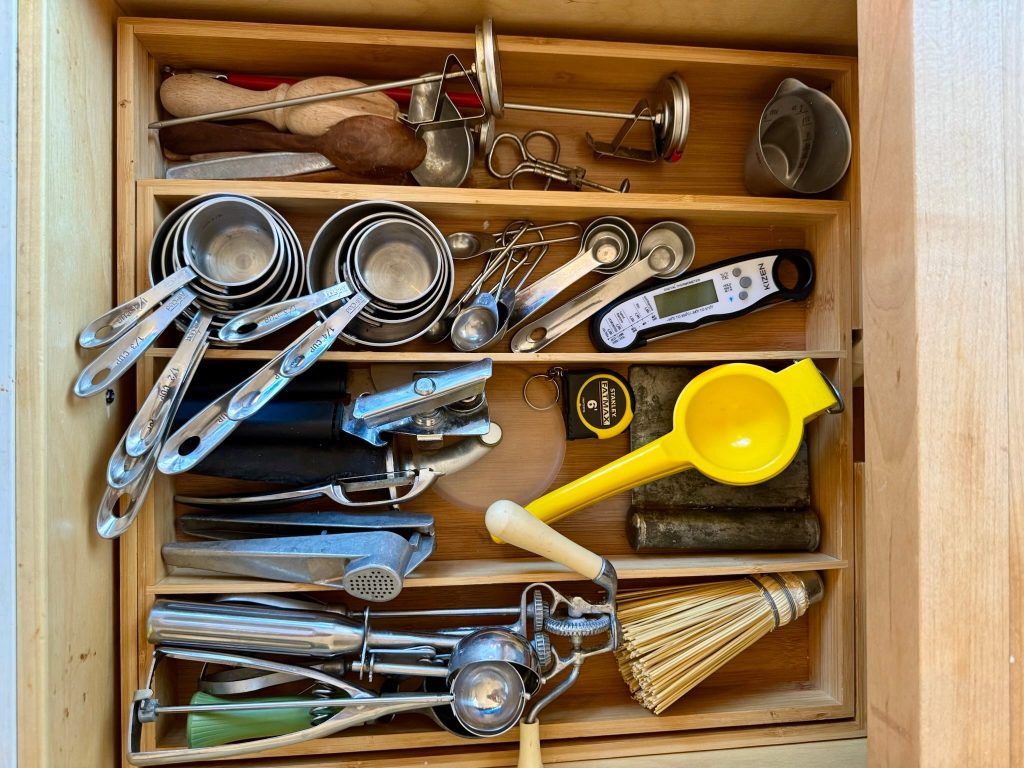
Is your kitchen utensil drawer a cluttered mess that makes cooking frustrating? You’re not alone.
When everything is jumbled together, finding the right tool takes time—and that slows you down. But imagine opening your drawer and instantly spotting exactly what you need, every single time. Organizing your kitchen utensil drawer isn’t just about tidiness; it’s about making your cooking easier and more enjoyable.
You’ll discover simple, effective tips to transform your chaotic drawer into a neat, efficient space that works for you. Ready to take control of your kitchen? Let’s get started.
Credit: www.thekitchn.com
Assess Drawer Space
Assessing your kitchen utensil drawer space is the foundation of effective organization. Before adding any dividers or containers, it’s essential to understand the exact size and condition of your drawer. This clarity helps you choose the right organizers and ensures everything fits comfortably without overcrowding.
Empty And Clean The Drawer
Start by removing every item from the drawer. This gives you a clear view of the entire space and helps you spot any crumbs or spills that might have accumulated unnoticed. A clean drawer not only looks better but also prevents dirt from interfering with your utensils or organizers.
Take this moment to sort through your utensils—do you really need everything in there? Clearing out items you rarely use can free up valuable space and make daily cooking easier.
Measure Dimensions
Use a tape measure or ruler to get the exact length, width, and depth of the drawer. Knowing these dimensions prevents you from buying organizers that are too big or too small. It’s tempting to guess, but precise measurements save time and money.
Think about the shape of the drawer as well—does it have any dividers, slanted sides, or unusual corners? These details influence what type of organizer will work best. Have you ever bought a container that just didn’t fit right? Avoid that frustration by measuring carefully.

Credit: www.reddit.com
Sort Utensils By Type
Sorting your kitchen utensil drawer by type creates a system that saves you time and frustration. When utensils are grouped logically, you know exactly where to reach for the tool you need. This simple step turns a chaotic drawer into an efficient workspace.
Group Similar Items
Start by gathering all your utensils and separating them into categories. Put spatulas, spoons, whisks, and peelers each into their own piles. This helps you see exactly what you have and how much space each group requires.
Think about how often you use each type. Keep daily essentials like forks and knives close together for quick access. Specialty tools can be grouped separately and stored in less accessible spots.
Declutter Unused Tools
Ask yourself which utensils you haven’t used in the past six months. If a tool hasn’t earned its place, it might be time to let it go. This frees up space and makes the drawer easier to organize.
Sometimes, duplicates sneak into your drawer. Do you really need three can openers or five spatulas? Removing extras prevents overcrowding and keeps your drawer feeling light and manageable.
Choose Organizers
Organizing a kitchen utensil drawer can transform your cooking space. The right organizers make finding tools easy and efficient. A tidy drawer saves time and reduces stress. Choosing the right organizers ensures everything has a place.
Select Drawer Dividers
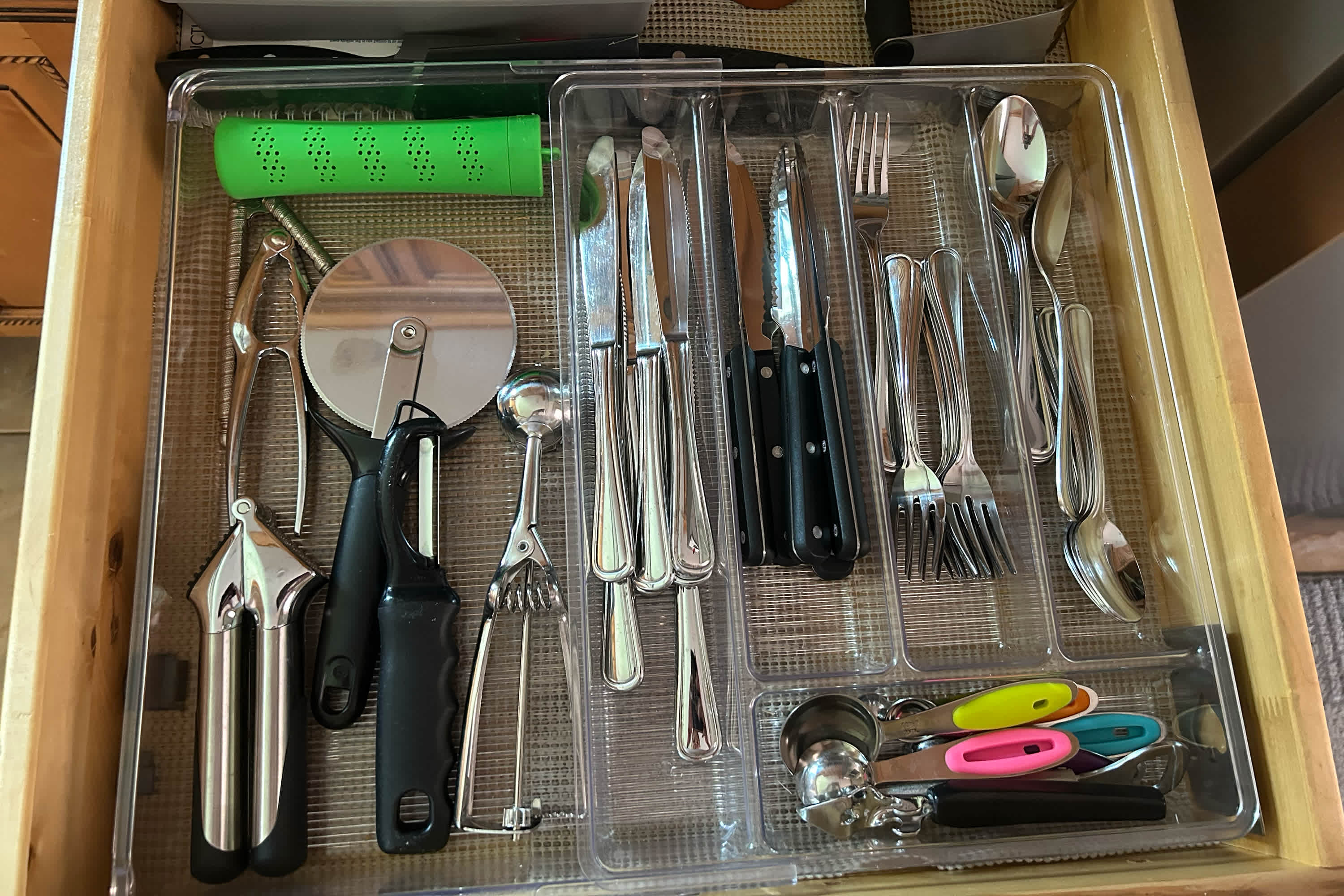
Drawer dividers are essential for organizing utensils. They help separate different types of tools. Choose adjustable dividers for flexibility. Fit them to your drawer’s dimensions. This prevents items from shifting. It keeps everything in its designated space. Use dividers to group similar utensils together.
Consider Multi-compartment Trays
Multi-compartment trays offer a practical solution. They provide sections for different utensil sizes. Trays help maximize space and improve accessibility. Look for trays that fit your drawer’s width. This ensures a snug fit and prevents movement. Choose trays made of durable materials. They should withstand regular use.
Arrange Utensils Strategically
Arranging utensils strategically transforms a cluttered drawer into a functional space. Proper placement saves time and reduces frustration during cooking. A well-planned layout helps keep utensils visible and easy to reach. Organizing by frequency and type makes daily tasks smoother.
Place Frequently Used Items Upfront
Keep your most-used utensils at the front of the drawer. This includes spoons, forks, knives, and spatulas. Having these tools easily accessible speeds up meal prep. Store less-used items toward the back to avoid clutter. This simple habit keeps your drawer neat and efficient.
Organize By Size And Function
Group utensils by their size and purpose. Place large items like ladles and tongs in one section. Smaller items such as teaspoons and peelers belong in another. Use dividers or small containers to separate groups. This method prevents items from mixing and saves space.
Maintain Organization
Keeping your kitchen utensil drawer organized is not a one-time task. It requires ongoing attention to prevent clutter from sneaking back in. Staying on top of organization helps you save time and avoid frustration when cooking or baking.
Regularly Reassess Contents
Take a moment every few weeks to check what’s inside your utensil drawer. Are there tools you never use? Maybe some items have duplicates or no longer belong in the kitchen. Removing unnecessary utensils frees up space and keeps things neat.
Think about how your cooking habits might have changed. Do you need more space for baking tools or fewer gadgets you rarely reach for? Adjusting the drawer contents to fit your current needs makes a big difference.
Establish Cleaning Routine
Food crumbs and grease can quickly build up in your utensil drawer if you’re not careful. Wiping it out regularly prevents grime from accumulating and keeps your utensils hygienic. Set a simple schedule—like cleaning the drawer once a month—and stick to it.
Use a damp cloth and mild soap to clean the inside, and dry it thoroughly before putting items back. You might be surprised how much easier it is to maintain order when the drawer feels fresh and clean.

Credit: www.apartmenttherapy.com
Frequently Asked Questions
How Do I Declutter A Kitchen Utensil Drawer?
Start by removing all utensils. Sort items into keep, donate, or toss piles. Only keep frequently used tools to avoid clutter.
What Is The Best Way To Separate Utensils?
Use drawer dividers or small containers. Organize utensils by type and frequency of use. This keeps items accessible and tidy.
How Can I Maximize Space In A Utensil Drawer?
Arrange utensils vertically and nest similar items together. Use adjustable dividers to customize space and avoid overcrowding.
What Materials Work Best For Drawer Organizers?
Plastic, bamboo, or metal organizers are durable and easy to clean. Choose materials that match your kitchen style and resist wear.
Conclusion
Organizing your kitchen utensil drawer brings ease to daily cooking. Neat drawers save time and reduce stress. Use dividers to keep items in place. Sort utensils by type and frequency of use. Regularly clean and remove unused tools. A tidy drawer helps keep your kitchen neat.
Small steps lead to big improvements. Start organizing today for a smoother kitchen experience.