
Picture this: It’s a crisp morning, and you’re savoring your favorite brew from a trusty stainless steel mug. But then, disaster strikes—a splash of coffee leaves an unsightly stain behind.
If you’ve ever faced the frustration of trying to clean stubborn coffee stains from your stainless steel mug, you’re not alone. The good news? With the right tips and tricks, you can restore your mug to its pristine glory in no time.
In this guide, you’ll discover straightforward methods that make stain removal a breeze. You’ll learn how to tackle those pesky marks without damaging your beloved mug. Imagine the satisfaction of seeing it sparkle like new again. So, if you’re ready to say goodbye to coffee stains for good, keep reading. Your mug—and your morning routine—will thank you!
Common Causes Of Coffee Stains
Coffee stains on stainless steel mugs happen often. Knowing why stains form helps clean them better. Stains result from how coffee interacts with the mug’s surface. Some causes are simple habits, others are natural reactions.
These causes make stains stick and look stubborn. Understanding them makes cleaning easier and faster.
Porous Surface Of Stainless Steel
Stainless steel may seem smooth but has tiny pores. These pores trap coffee particles and oils. Over time, these trapped particles cause visible stains. The more use without cleaning, the worse the stains become.
Acidity Of Coffee
Coffee contains acids that react with metal surfaces. These acids can etch the mug slightly. This etching creates more areas for coffee to cling to. The acidic nature makes stains harder to remove with plain water.
Heat And Temperature Changes
Hot coffee expands the mug’s surface slightly. When the mug cools, it contracts. This cycle pushes coffee deeper into pores. Heat also helps coffee oils stick firmly to the metal. Repeated heat and cool cycles worsen stains.
Oils And Tannins In Coffee
Coffee contains natural oils and tannins. These substances leave dark marks on surfaces. Oils make stains greasy and sticky. Tannins cause brownish discoloration. Both make stains visible and tough to clean.
Neglecting Immediate Cleaning
Leaving coffee in the mug for long periods causes stains. Drying coffee leaves solid residue on the surface. The longer it stays, the harder the stain. Regular cleaning prevents buildup and keeps the mug fresh.

Credit: ca.style.yahoo.com
Basic Cleaning Methods
Basic cleaning methods are your first line of defense against coffee stains on stainless steel mugs. These simple techniques often restore your mug’s shine without the need for harsh chemicals or special tools.
Using Dish Soap And Water
Start by filling your mug with warm water and adding a few drops of dish soap. Let it soak for a few minutes to loosen the coffee residue. Then, use a sponge or brush to scrub the inside gently, paying attention to the stained areas.
Rinse thoroughly with clean water to remove all soap traces. This method works well for fresh stains and regular maintenance. Have you ever noticed how just warm soapy water can make your mug look almost new again?
Wiping With A Soft Cloth
After washing, wipe the mug with a soft cloth to dry and polish the surface. Avoid abrasive materials to prevent scratches. A microfiber cloth works best because it picks up moisture and leaves a streak-free shine.
Try this simple step next time you clean your mug—you might find the stain disappears faster than you expected. How often do you take a moment to give your mug this quick polish?
Natural Cleaning Remedies
Natural cleaning remedies offer a safe and effective way to remove coffee stains from your stainless steel mug without harsh chemicals. These simple ingredients are often already in your kitchen, making them convenient and budget-friendly. Plus, they are gentle on the environment and your hands.
Baking Soda Paste
Baking soda is a mild abrasive that lifts stains without scratching the surface. Make a thick paste by mixing baking soda with a little water.
- Apply the paste directly onto the coffee stain inside your mug.
- Use a soft cloth or sponge to gently scrub the stained area in circular motions.
- Let it sit for 10–15 minutes before rinsing thoroughly with warm water.
I once had a stubborn ring of coffee residue that just wouldn’t budge with regular soap. After trying baking soda paste, the stain disappeared with minimal effort. Have you tried this simple trick yet?
Vinegar Soak
Vinegar’s acidity breaks down coffee stains and removes lingering odors. Pour white vinegar into your mug until the stains are covered.
- Let it soak for 30 minutes to an hour for deep stains.
- After soaking, scrub gently with a sponge or brush.
- Rinse well with water to remove any vinegar smell.
This soak method worked wonders for me after forgetting a mug full of coffee overnight. The stain faded without any scrubbing frenzy. What’s the oldest coffee stain in your mug that needs rescuing?

Credit: ecococoon.com.au
Commercial Cleaners For Stains
Commercial cleaners offer a fast and effective way to remove coffee stains from stainless steel mugs. These products are designed to break down tough stains and restore the shine of your mug quickly. Using the right cleaner ensures the stain disappears without damaging the surface.
Choosing The Right Cleaner
Look for cleaners made for stainless steel or tough stains. Avoid harsh chemicals that can scratch or dull the mug’s surface. Products with gentle abrasives or natural ingredients work well. Check the label to ensure it targets coffee or tea stains specifically. Always pick cleaners that are safe for food-contact surfaces.
Application Tips
- Apply a small amount of cleaner to the stained area.
- Use a soft cloth or sponge to rub gently in circular motions.
- Let the cleaner sit for a few minutes to loosen the stain.
- Rinse thoroughly with warm water to remove all residue.
- Dry the mug with a clean towel to avoid water spots.
Preventing Future Stains
Preventing future coffee stains on your stainless steel mug saves time and keeps your mug looking fresh. Simple habits can make a big difference in maintaining its shine and cleanliness. Let’s look at easy ways to keep stains at bay before they start.
Regular Cleaning Routine
Cleaning your mug after each use is the best way to avoid stubborn stains. Don’t let coffee sit inside for hours—rinse it out quickly with warm water.
If you notice any spots, use a gentle scrubber or a soft sponge with mild dish soap. This stops stains from settling in and turning hard to remove later.
Try setting a reminder if you tend to forget. Your future self will thank you for not dealing with tough stains!
Proper Mug Usage
Think about how you use your mug. Drinking directly from the rim can leave oils and residue that cause staining over time.
Using a straw or pouring coffee into a cup for longer sipping sessions can reduce contact and help keep your mug clean.
Also, avoid leaving coffee in the mug overnight or for long periods. This habit almost guarantees stains, no matter how good your cleaning routine is.
Troubleshooting Stubborn Stains
Stubborn coffee stains on stainless steel mugs can be tough to remove. Sometimes, regular cleaning just won’t do the trick. Persistent marks need special care to avoid damage while restoring the mug’s shine. This section helps tackle those hard-to-clean stains effectively.
Avoiding Scratches
Scratches ruin the smooth surface of your stainless steel mug. Use gentle cleaning tools like soft sponges or microfiber cloths. Avoid steel wool or abrasive scrubbers that can leave marks. Mild dish soap and warm water usually clean well without harm.
For tough stains, try a paste of baking soda and water. Apply it gently with a soft cloth. Rinse thoroughly to remove all residue. Never use harsh chemicals or bleach; they can damage the metal finish.
When To Replace Your Mug
Sometimes stains become permanent despite all efforts. Deep scratches and dents can harbor bacteria and affect taste. If cleaning no longer restores your mug, it may be time to replace it. A new mug keeps your drinks fresh and safe.
Invest in a high-quality stainless steel mug for durability. Regular maintenance extends the life, but some wear is normal. Watch for signs like rust spots, cracks, or persistent odors. These indicate replacement is necessary.
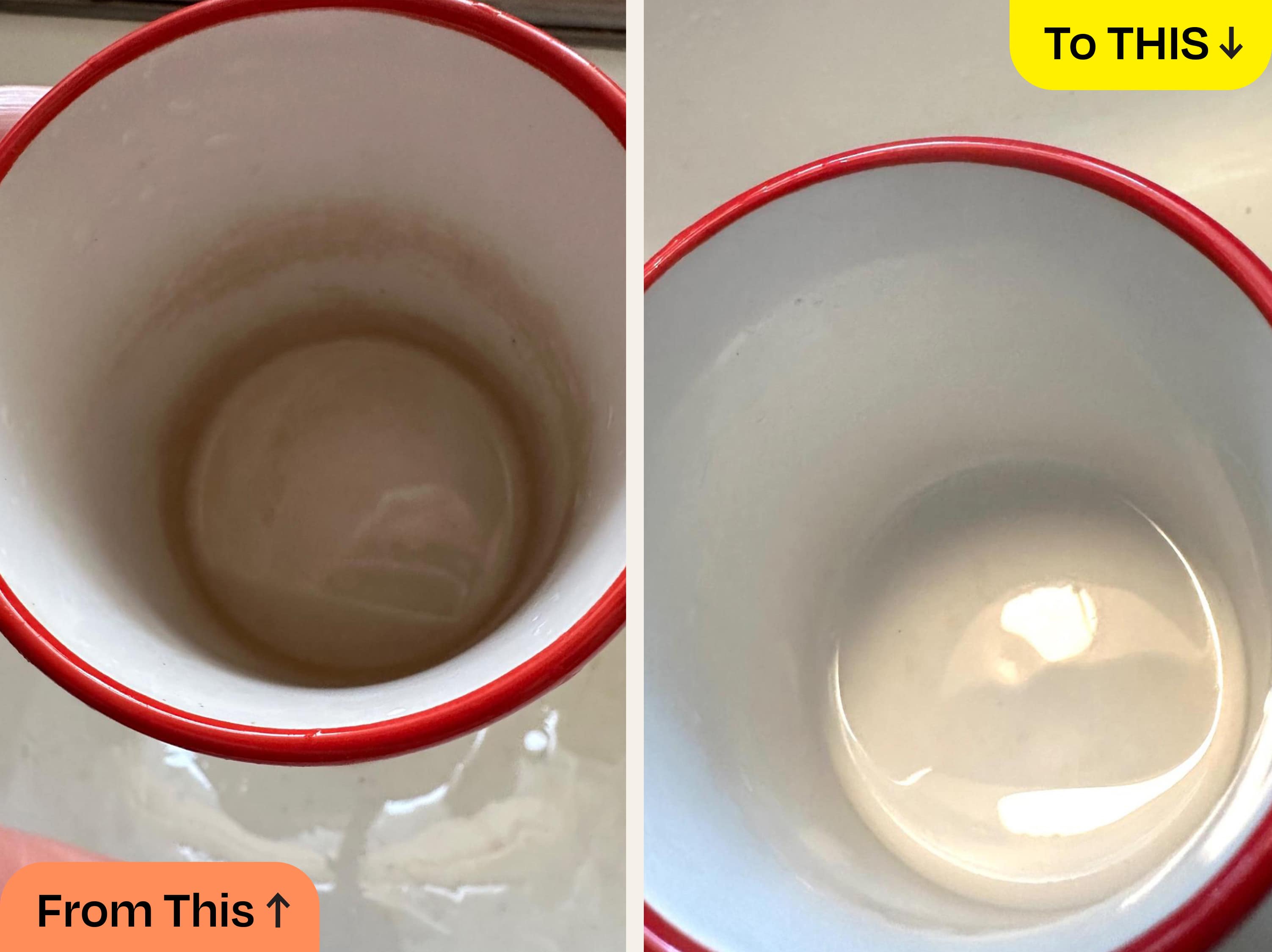
Credit: www.thekitchn.com
Frequently Asked Questions
How Do I Remove Coffee Stains From Stainless Steel Mugs?
Use a mixture of baking soda and water to form a paste. Apply it to the stain, scrub gently, then rinse thoroughly. This method effectively lifts stains without damaging the steel surface.
Can Vinegar Clean Coffee Stains On Stainless Steel?
Yes, white vinegar is excellent for removing coffee stains. Soak a cloth in vinegar, rub the stain, then rinse well. Vinegar breaks down stain molecules and restores shine safely.
Is Baking Soda Safe For Stainless Steel Mugs?
Baking soda is safe and non-abrasive for stainless steel. It cleans stains without scratching the surface. Use a gentle scrub with baking soda paste for best results.
How Often Should I Clean Coffee Stains From My Mug?
Clean your stainless steel mug after each use to prevent stains. Regular cleaning avoids buildup and keeps your mug looking new and hygienic.
Conclusion
Cleaning coffee stains from your stainless steel mug is simple and quick. Use common household items like baking soda or vinegar. Gently scrub the stains to avoid damage. Rinse well and dry the mug completely. Regular cleaning keeps your mug looking new and fresh.
Enjoy your coffee without worrying about stains. A clean mug also tastes better. Keep these tips handy for easy stain removal anytime. Your stainless steel mug will stay shiny and stain-free for longer.