
Choosing the right width for your spoon gouge can make a huge difference in your woodcarving projects. You might wonder, “What width is best for my needs?” The answer isn’t one-size-fits-all, but understanding the options can help you work faster and achieve cleaner results.
You’ll discover how to pick the perfect width for your spoon gouge, making your carving smoother and more enjoyable. Keep reading to find out what suits your style and skill level best!
Spoon Gouge Basics
Understanding the basics of a spoon gouge is essential before deciding on the best width for your tool. A spoon gouge is a specialized carving chisel designed to create curved and hollowed shapes, often used in woodturning and woodcarving projects. Knowing its purpose and the types available helps you choose the right width to match your project’s needs and your carving style.
Purpose And Use
Spoon gouges are primarily used to carve concave shapes, such as bowls, spoons, and other hollow forms. Their curved cutting edge allows you to smoothly remove wood from inside rounded objects.
Choosing the right width affects control and precision. Narrower gouges let you carve fine details and tight curves, while wider ones help remove more material quickly and shape larger hollows.
Think about the projects you want to work on. Are you focusing on delicate spoon handles or larger, deeper bowls? Your answer will guide the width choice.
Types Of Spoon Gouges
Spoon gouges come in various shapes and profiles, each suited for different tasks. The most common types include:
- U-shaped gouges:These have a deep, rounded curve, perfect for deep hollows and smooth concave cuts.
- V-shaped gouges:Though less common for spoons, they offer sharp cuts for detailed work and angles.
- Elliptical or oval gouges:Provide a balance between deep cuts and surface smoothing, great for versatile projects.
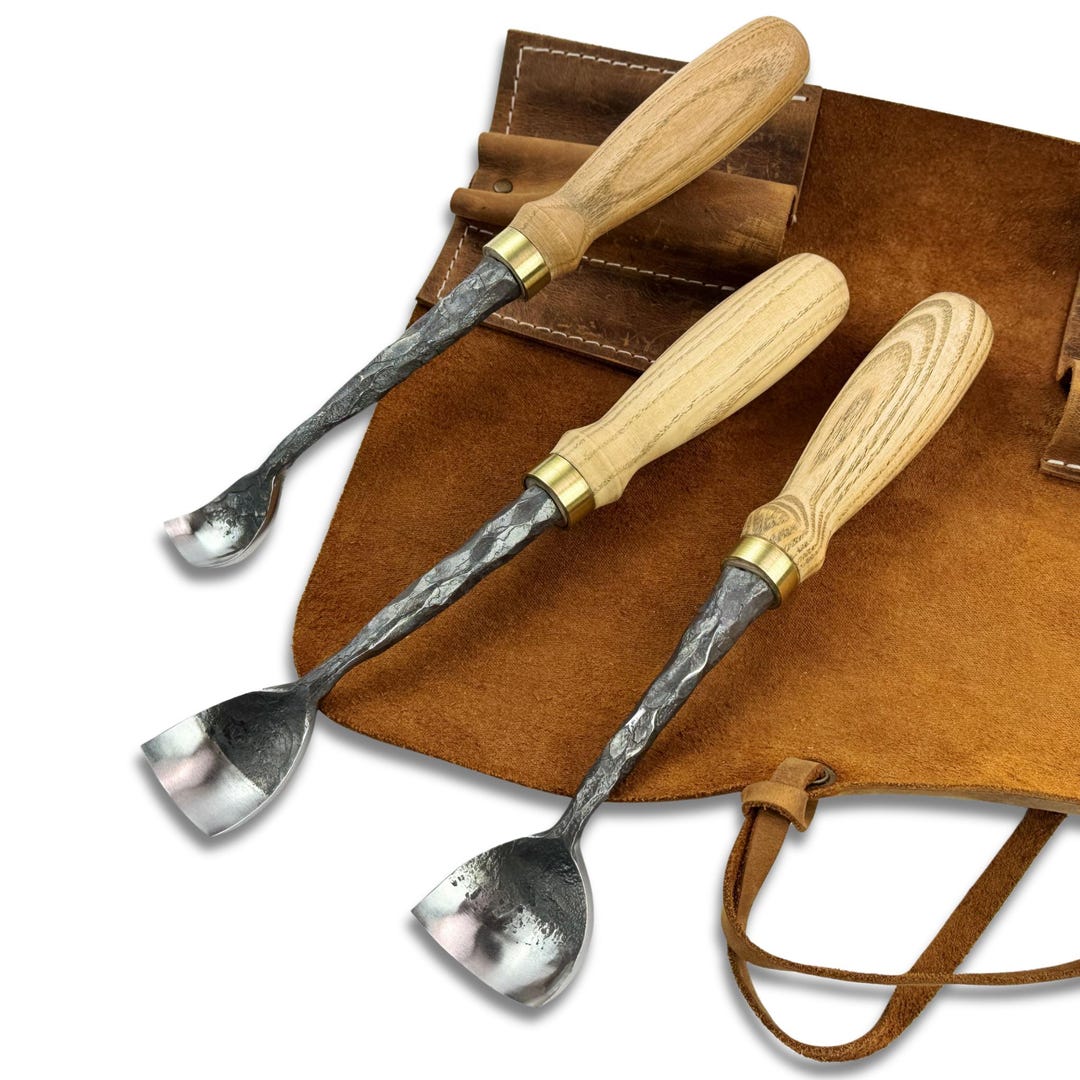
Within these types, widths usually range from about 6mm (1/4 inch) to 25mm (1 inch) or more. Your choice depends on the scale of your work and how much control you want.
I remember starting with a narrow 6mm gouge for carving small spoon bowls. It gave me excellent control but was slow for larger pieces. Switching to a 12mm widened my possibilities without losing too much precision.
What kind of wood shapes do you prefer carving? Narrow or wide gouges might change your experience drastically.
Credit: www.etsy.com
Factors Influencing Width Choice
Choosing the right width for your spoon gouge depends on several key factors that affect your carving experience and the final outcome. Understanding these factors helps you select a tool that matches your wood type, project size, and the level of detail you want to achieve. Let’s break down how these elements influence your width choice.
Wood Type And Grain
The type of wood you work with plays a big role in deciding gouge width. Hardwoods like maple or oak require a narrower gouge for better control and precision, especially when working against the grain. Softer woods such as basswood or pine allow for wider gouges, speeding up the removal of material without sacrificing smoothness.
Grain direction also matters. Working with the grain lets you use wider gouges comfortably, but carving across or against the grain often demands a narrower tool to avoid tear-out. Have you noticed how certain woods react differently under the gouge? Paying attention to these details can save you frustration and improve your results.
Project Size And Detail
Think about the size and complexity of your spoon project before picking gouge width. Large, simple spoons benefit from wider gouges that remove wood quickly and maintain consistent curves. Smaller or highly detailed spoons need narrower gouges to carve fine features and tight spots without damaging the surrounding areas.
If your project includes delicate patterns or intricate bowl shapes, a narrow gouge gives you better maneuverability. Conversely, if speed and rough shaping are your priorities, a wider gouge is more efficient. What level of detail are you aiming for in your next spoon? Your answer should guide your gouge width choice.
Common Widths And Their Uses
Choosing the right width for a spoon gouge can make all the difference in your woodworking projects. With various widths available, each brings unique strengths to your carving toolkit. Understanding how these widths can be utilized is key to achieving the detail and style you desire in your work.
Narrow Gouges For Fine Detail
When precision is your goal, narrow gouges are your best friend. These gouges are perfect for intricate patterns and delicate features. Imagine carving the fine veins of a leaf or the tiny scales on a fish—this is where narrow gouges shine.
They allow you to have control over the smallest of details without overwhelming the surrounding area. If you’ve ever tried to carve a detailed portrait, you’ll appreciate how these tools can bring your vision to life without compromise.
Medium Width For Versatility
Medium-width gouges offer a balance between detail and efficiency. They are the jack-of-all-trades in the carving world. Whether you’re working on a moderately detailed piece or need something that can adapt to various styles, these gouges deliver.
Consider them your go-to tool for general shaping and refining. Their adaptability makes them invaluable for both beginners and seasoned carvers. Have you ever started a project unsure of the specifics? Medium-width gouges are your safety net.
Wide Gouges For Shaping
Wide gouges are ideal for removing large amounts of wood quickly. They are perfect for initial shaping or when you’re aiming for bold, sweeping designs. Think about sculpting a large wooden bowl or a robust animal figure.
These gouges help you set the stage for finer details later on. Their efficiency in bulk removal saves you time and energy, allowing you to focus on the artistic aspects of your work. Have you tackled a large project and felt overwhelmed? Wide gouges make the process more manageable.
Each width has its place, and understanding their uses can transform your woodworking experience. What width do you find yourself reaching for most often?
Expert Recommendations
Experts in wood carving agree that choosing the right width for a spoon gouge affects your work greatly. The width impacts precision, comfort, and control during carving. Professionals suggest selecting widths based on the project and personal handling preference. The right width makes carving easier and produces cleaner results.
Preferred Widths By Professionals
Carvers often select gouges between 1/4 inch and 1/2 inch wide. Narrower gouges, around 1/4 inch, suit detailed work and fine shapes. Wider gouges, near 1/2 inch, handle larger curves and remove more wood quickly. Many experts keep a range of widths to adapt to different tasks.
- 1/4 inch: Ideal for detailed, delicate carving
- 3/8 inch: Versatile size for most spoon shapes
- 1/2 inch: Best for broad, sweeping cuts
Adjusting Width For Comfort And Control
Comfort matters as much as size. Some carvers find a slightly narrower gouge easier to control. Others prefer wider tools for stability and power. Testing a few widths helps find what feels natural. Grip style and hand size also influence the best choice.
- Try different widths before buying
- Consider how the gouge fits your hand
- Choose a width that allows smooth, steady cuts
Maintenance And Sharpening Tips
Proper maintenance and sharpening keep your spoon gouge working well. A sharp edge makes carving easier and safer. Regular care extends the tool’s life and improves performance. Follow simple tips to maintain and sharpen the gouge correctly.
Keeping The Edge Sharp
Clean the gouge after each use. Remove wood chips and dust with a brush or cloth. Store the tool in a dry place to prevent rust. Use a honing stone or strop often to maintain the edge. Stropping aligns the blade and keeps it sharp longer. Avoid cutting hard materials that can dull the edge quickly.
Adjusting Width Through Sharpening
The spoon gouge’s width can be fine-tuned by sharpening. Grinding the bevel changes the cutting angle and width slightly. Use a sharpening jig for consistent results. Sharpen with a fine-grit stone to control width carefully. Check the edge frequently during sharpening to avoid removing too much metal. A narrower edge suits delicate work, while a wider edge handles rough shaping.

Credit: beavercrafttools.com

Credit: completeeq.com
Frequently Asked Questions
What Is The Ideal Width For A Spoon Gouge?
The ideal width depends on your project size. Generally, 3/8 to 1/2 inch suits most tasks. Narrow widths offer precision; wider ones remove more material quickly.
How Does Width Affect Spoon Gouge Performance?
Wider gouges remove wood faster but reduce control. Narrow gouges offer detailed carving and better control. Choose width based on the carving complexity and material.
Which Spoon Gouge Width Is Best For Beginners?
Beginners benefit from a 3/8 inch gouge. It balances control and wood removal. This width helps develop carving skills without overwhelming the user.
Can Spoon Gouge Width Vary By Wood Type?
Yes, softer woods allow wider gouges for faster shaping. Hardwoods may require narrower gouges for better control. Adjust width to match wood density and carving detail.
Conclusion
Choosing the right width for a spoon gouge depends on your project needs. Narrow gouges work well for detailed carving. Wider gouges help remove more wood quickly. Balance control and speed for the best results. Try different widths to see what feels best.
Your comfort and the wood shape matter most. Keep your tools sharp and practice often. This approach helps you carve smoothly and confidently.